
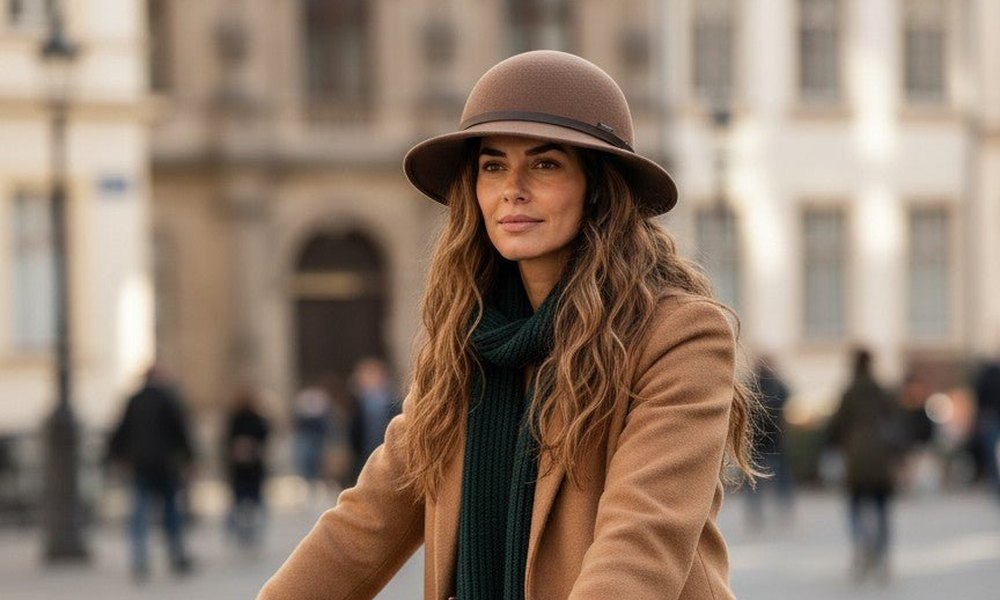

Can you wear a hat under your bike helmet? Yes, but not just any hat. A thick knitted beanie lifts the helmet, presses and slips, so the helmet no longer fits properly. In winter you stay warmer with thin layers that leave the fit unchanged: ear warmers, a thin under-helmet cap and a good scarf are enough for most rides around town.
At a glance: what works when
- Chilly autumn morning: a headband or ear warmers
- Properly cold: a thin under-helmet cap in merino or fine fleece
- Frost and wind: a thin balaclava, or an under-helmet cap plus a snood for the neck
- Short trip with a meeting afterwards: ear warmers on the helmet, so your hair stays in place
Why your winter beanie does not belong under your helmet
A bike helmet is made to sit in a certain way: close to the head, level on the forehead, without wobbling. A thick beanie pushes it upwards. It then sits looser, tips back more easily and leaves the forehead uncovered. On top of that, thick wool under a helmet quickly feels tight and hot, and the hat can slip when you brake or turn your head.
The Bicycle Helmet Safety Institute in the US therefore recommends thin layers: according to BHSI, very thin balaclavas do not affect the fit of the helmet, while a thicker earband can (source: BHSI, Winter Helmets). A simple rule: anything under the helmet should be thin enough that you only need to loosen the dial by a click or two.
Ears first: bike helmet ear warmers and headbands
When it gets colder, the ears are usually the first to freeze. BHSI calls covering the ears the most important first step as temperatures fall. There are two easy solutions:
- Ear warmers that attach to the helmet. They sit on the outside of the helmet or on the straps, not underneath it. So the helmet fits exactly as it does in summer, and your hair stays as it is.
- A thin headband. It keeps your forehead and ears warm without adding bulk. Look for flat seams so nothing presses.

Choosing the right hat for under your bike helmet
When it gets properly cold, an under-helmet cap is the next step. It is designed to be worn under a helmet and is therefore very thin. Here is what matters:
- Material: fine merino keeps you warm even if you sweat a little and hardly smells. Thin fleece is cheaper and blocks the wind well.
- Cut: close-fitting, with flat seams and ideally with ear flaps.
- Check the fit: put the cap and helmet on together, adjust the dial and shake your head. The helmet must not wobble and should sit level on your forehead.
Some helmet brands offer their own winter kits that are matched to their models. When you buy, ask whether there is one for your helmet.
Don't forget your neck
A warm head is not much use if there is a draught down your collar. A wool snood or scarf closes the gap between jacket and helmet. In frost, a thin balaclava covers head, ears and neck in one go. Tuck loose scarf ends into your jacket so nothing flaps or gets caught.
If you wear glasses, do not pull the scarf over your nose. Otherwise your lenses will fog up as soon as you stop at the lights.
Wind and ventilation: how much air you need in winter
Helmet vents are made for summer. In winter they can let in a cold draught. Some riders tape them over, but BHSI points out that you can easily end the ride with a sweaty head. A better option is a layer that blocks the wind but still breathes: a fleece under-helmet cap or a helmet cover in sturdy fabric.
Leave yourself some room, too. Riding uphill or in a hurry warms you up quickly. Better one thin layer less, plus ear warmers you can take off at the lights.
Warm and stylish: your helmet as part of your winter wardrobe
Many people leave their helmet at home in winter because it does not go with their coat and scarf. Yet there are now helmets that look like fashion rather than sports gear. One example is YAKKAY: a fabric cover goes over the helmet, such as a tweed cap or a wool felt fedora. The cover can be swapped, so it is one helmet, many looks. A cover in sturdy fabric also helps against the wind.
For the ears, there are matching YAKKAY ear warmers in cotton with a soft fleece lining. They fit every size of the Smart Two helmet. You will find helmets with covers for women and for men, and our size guide helps you find the right size. Exchanging the size of a helmet is easy.

By the way, ear warmers also make a lovely small gift. You will find more ideas in our gifts for people who love to cycle.
Quick check before your first cold ride
- Put on your helmet with everything you plan to wear under it in winter.
- Adjust the dial and the straps again: the chin strap sits close but does not press.
- Shake your head and nod: the helmet stays level on your forehead and does not wobble.
- Ears, neck and hands warm? Then off you go.
FAQ
Is it OK to wear a hat under a bike helmet?
Yes, as long as it is thin and the helmet still sits firmly and level. A thick knitted or bobble hat is not suitable because it lifts the helmet and can slip. Under-helmet caps in fine merino or fleece work better.
What kind of hat can you wear under a bike helmet?
A close-fitting under-helmet cap with flat seams, ideally with ear flaps. It should be thin enough that you only need to adjust the helmet slightly. If only your ears get cold, ear warmers or a thin headband are enough.
Do I need a bigger bike helmet for winter?
Usually not. With thin layers, it is enough to loosen the dial a little. If you are buying a new helmet, try it on with the layer you plan to wear under it in winter. If you are between two sizes, choose the larger one.



Leave a comment
This site is protected by hCaptcha and the hCaptcha Privacy Policy and Terms of Service apply.